

The True Cost of Cheap Jewellery — Why Investing in Quality Saves You Money
The True Cost of Cheap Jewellery: Why Investing in Quality Saves You Money
A €15 necklace from a high-street chain. It looks lovely in the shop — the gold is bright, the chain catches the light, and the price feels like a bargain. You wear it for a few weeks. The gold begins to fade. A month later, the silver-coloured metal underneath starts showing through. By month three, the necklace is unwearable — the gold is patchy, the chain has developed a dull grey patina, and your neck has developed a faint green mark where the chain rests against your skin. You throw it away. You buy another €15 necklace. The cycle repeats.
Over the course of a year, you've spent €60 on four necklaces — none of which lasted more than a season. That's €60 you could have put toward a single piece of quality jewellery that would still look as good in year five as it did on day one. This is the hidden mathematics of cheap jewellery — and once you understand it, you'll never see a "bargain" necklace the same way again.
Cost Per Wear: The Only Metric That Matters
In fashion economics, there's a concept called cost per wear. It's simple: divide the price of an item by the number of times you wear it. The result tells you what each wearing actually costs you. A €500 coat worn 200 times over five years costs €2.50 per wear — reasonable for something that keeps you warm and looks good doing it. A €20 top worn twice before it loses its shape costs €10 per wear — far more expensive, in real terms, than the coat.
Jewellery follows the same logic — but the contrast between cheap and quality is even starker, because jewellery is worn more consistently than almost any other item. A necklace you love might be worn 300 days a year. A ring might never leave your finger. Here's how the maths works out:
| Scenario | Price | Wears Over Lifetime | Cost Per Wear | Total Spent Over 5 Years |
|---|---|---|---|---|
| Fast-fashion necklace (replaced every 4 months) | €15 × 15 replacements | ~100 wears each | €0.15 | €225 |
| LOTTEDS necklace (worn 300 days/year for 5+ years) | €65 once | ~1,500+ wears | €0.04 | €65 |
Over five years, the "cheap" necklace costs more than three times as much as the quality one — and that's before you factor in the green marks, the rashes, the time spent shopping for replacements, and the environmental cost of 15 discarded necklaces sitting in landfill. The quality piece, by contrast, still looks beautiful in year five. It's been worn over a thousand times. It's accumulated memories — the dinner where someone complimented it, the meeting where you fidgeted with it while making a point, the ordinary Tuesday when you caught your reflection and smiled. And it costs less per day than the electricity to charge your phone.
The Hidden Costs of Cheap Jewellery
The price tag is only the beginning. Cheap jewellery carries a set of hidden costs that aren't visible at the point of purchase but accumulate relentlessly over time:
1. Skin Reactions and Health Costs
Brass, copper, and nickel — the metals most commonly used in cheap jewellery — don't just look bad when they react with your skin. They cause real physical discomfort. Contact dermatitis from nickel can require doctor visits, prescription creams, and weeks of avoiding jewellery altogether. For people who develop full nickel allergy, the condition is permanent — and it limits their ability to wear jewellery for the rest of their lives. The €15 saved on a cheap necklace doesn't begin to cover the cost of a single dermatologist appointment. Learn how cheap metals affect your skin →
2. The Time Cost of Constant Replacement
Every time a piece of jewellery fails — the gold fades, the chain breaks, the stone falls out — you have to replace it. That means time spent browsing online or in shops, reading reviews, comparing prices, making decisions. Over the course of years, the cumulative time spent replacing disposable jewellery is significant. Time is the one resource you can't get more of. Spending it on repeat purchases of the same thing is not thrift. It's waste.
3. Environmental Cost
Fifteen discarded necklaces over five years. Multiply that across millions of consumers, and you're looking at tonnes of metal-plated brass entering landfill every year. Brass doesn't biodegrade. The thin electroplating contains chemicals that can leach into soil and groundwater. And because the base metal is so cheap, there's no economic incentive to recycle it — it costs more to recover the metal than the metal is worth. By contrast, 316L stainless steel is one of the most recycled materials on the planet, with a global recycling rate exceeding 85%. When a LOTTEDS piece eventually reaches the end of its long life — which is usually because the owner's style has changed, not because the piece has degraded — the metal can be melted down and reborn as something new. Our sustainability commitments →
4. The Emotional Cost
This is the cost that rarely gets calculated, but it's real. The disappointment of watching a piece you loved — a gift from someone special, a treat you bought yourself to mark an occasion — gradually degrade into something unwearable. The frustration of scrubbing green residue off your skin. The quiet sadness of throwing away something that once made you feel beautiful. These are not trivial experiences. They're the accumulated emotional cost of an industry that has normalised disposability.
Why Quality Jewellery Costs More Upfront — And Why That's a Good Thing
A LOTTEDS necklace costs more than a fast-fashion necklace. That's undeniable. But the reasons for that higher upfront cost are exactly the reasons the piece will last for years rather than months:
- 316L surgical-grade stainless steel costs 5–6 times more than the brass used in cheap jewellery. But it doesn't corrode. It doesn't react with skin. It doesn't lose its structural integrity after months of wear.
- PVD gold costs more to apply than traditional electroplating — the equipment alone is a significant capital investment. But the gold is bonded at the molecular level and lasts for years rather than weeks.
- Hand-finishing takes 20–45 minutes per piece. Machine finishing takes seconds. But hand-finishing produces a surface quality — that warm, liquid lustre — that machine finishing cannot replicate.
- Independent double inspection means every piece is examined twice under 10× magnification. This adds labour cost. It also means that loose stones, surface defects, and clasp issues are caught before the piece reaches a customer — rather than after.
Every one of these choices makes the piece more expensive to produce. Every one of these choices makes the piece last longer, look better, and feel more comfortable on the skin. The higher upfront cost is not a markup — it's the actual cost of building something that endures.
The LOTTEDS cost-per-wear guarantee: Buy a LOTTEDS piece. Wear it 300 days a year for 5 years. If it doesn't still look and feel beautiful at the end of those 5 years — if the gold has faded, if the steel has corroded, if the stones have loosened — our Lifetime Warranty covers it. We'll repair or replace it. We can offer this warranty because we're confident in the materials and the craftsmanship. Try getting that from a €15 necklace. Warranty details →
What "Investment Piece" Actually Means
The phrase "investment piece" is overused in fashion — often applied to anything with a price tag above a certain threshold. But in jewellery, the concept has genuine meaning. An investment piece is not defined by its price. It's defined by its longevity, its versatility, and its capacity to accumulate meaning over time.
A LOTTEDS necklace isn't an investment in the financial sense — it won't appreciate in value like a rare vintage watch. But it's an investment in the practical sense: a single purchase that replaces a cycle of disposability. A piece that you reach for every morning without thinking, because it goes with everything and feels like nothing. A piece that, five years from now, will still be in your jewellery box — still beautiful, still comfortable, still the one you choose when you want to feel like yourself.
That's not a cost. That's a return.

Start Your Investment Wardrobe
Our Essential Collection is designed to be worn every day for years — classic pieces in 316L steel with PVD gold that never go out of style.
Shop Essentials → · Shop Sale →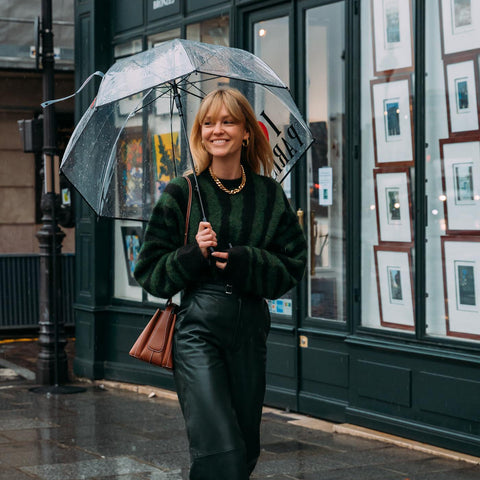
The Necklace That Pays for Itself
A Snake chain necklace at €65, worn 300 days a year for 5 years, costs €0.04 per wear. The €15 alternative, replaced every 4 months, costs €0.15 per wear — and never looks as good.
Snake Collection → · All Necklaces →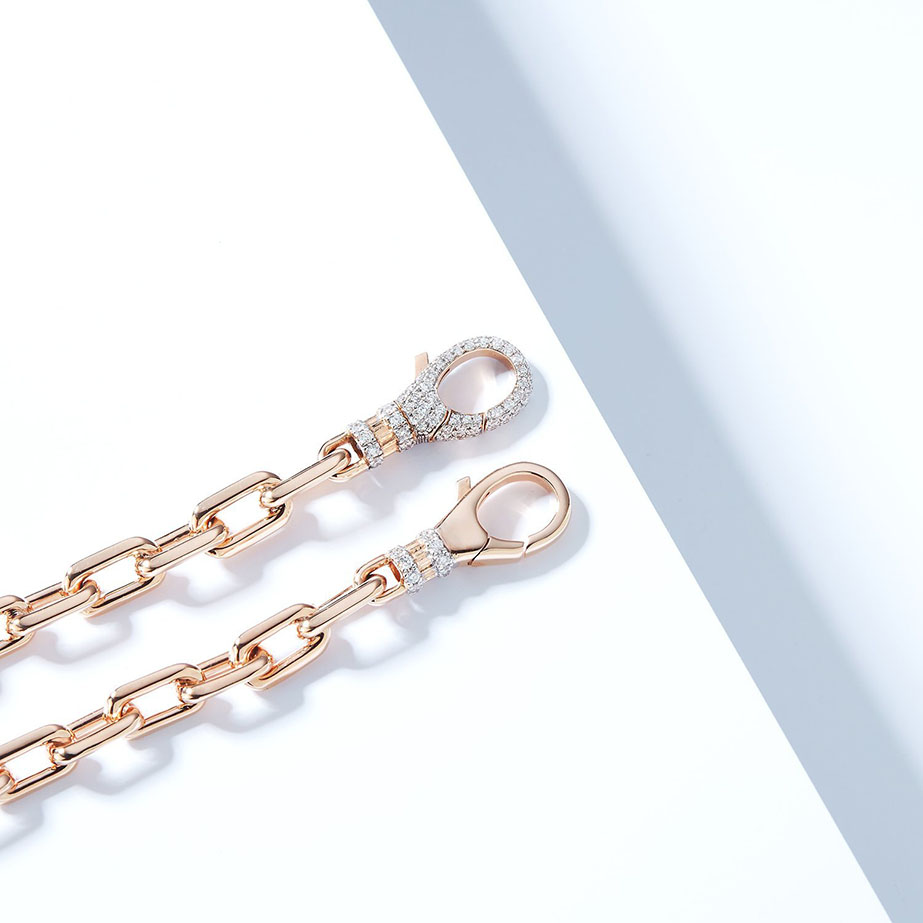
Rings Built for a Lifetime
Our rings are worn through hand washing, typing, gym sessions, and everything in between. 316L steel and PVD gold mean they handle it all — and keep their brilliance for years.
Shop Rings → · Rollers Collection →How We Price Our Jewellery → · Materials & Craftsmanship → · Sustainability →
lascia un commento