

How to Care for Your Jewellery — A 5-Minute Routine
How to Care for Your Jewellery: A 5-Minute Routine That Keeps Everything Looking New
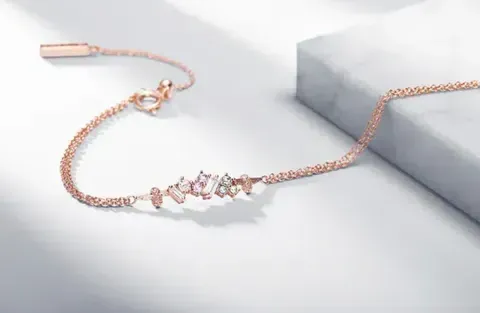
Good jewellery is built to last — especially when the foundation is 316L surgical-grade stainless steel with PVD-bonded 18K gold. These aren't materials that degrade easily. They don't tarnish like silver-plated brass. They don't fade like electroplated costume jewellery. They don't react with your skin like nickel-laden alloys. They are, in almost every sense, engineered for endurance.
But even the most resilient materials benefit from a little attention. The good news — and this is worth stating upfront — is that you don't need ultrasonic cleaners. You don't need expensive jewellery solutions from the chemist. You don't need hours of careful labour with cotton buds and magnifying glasses. A few simple habits — most taking less than a minute — will keep your LOTTEDS pieces looking exactly as they did on the day you unboxed them.
This guide covers everything: daily habits, the monthly deep clean, what to do about sterling silver's natural patina, how to store pieces properly, and which environments to avoid. It's the same advice we give our private clients. It works.
The Golden Rule: Put Jewellery On Last, Take It Off First
If you adopt exactly one habit from this entire guide, make it this one. It costs nothing. It takes no time. And it will do more to preserve your jewellery than any cleaning product ever could.
Put your jewellery on last. After your moisturiser. After your perfume. After your hairspray. After every product in your morning routine has been applied and has had a moment to settle. Then — and only then — do you put on your necklace, your rings, your bracelets, your earrings.
Why does this matter? Because the products we use every day — lotions, fragrances, hair products, sun creams — contain chemicals that, while perfectly safe for skin, can build up on metal surfaces over time. They create a microscopic film. That film attracts dust. It traps moisture. It can, over weeks and months, dull the mirror polish of your jewellery. Even PVD gold — which is extraordinarily resistant — benefits from not having to contend with a daily layer of body lotion.
Take your jewellery off first. When you undress in the evening, reverse the order. Jewellery comes off before you wash your face, before you apply night cream, before you shower. This prevents product buildup, reduces mechanical wear from rubbing against clothing during removal, and eliminates the risk of a ring slipping off into the sink.
If you do these two things — last on, first off — you've already eliminated about 80% of what causes jewellery to look tired over time. Everything else in this guide is a bonus.
Pro tip from our atelier: Keep a small dish or tray on your bedside table and another in your bathroom. When you take jewellery off, it goes directly into the dish — not onto the counter, not into a pocket, not balanced precariously on the edge of the sink. This single habit also dramatically reduces the "I can't find my favourite ring" moments that every jewellery wearer knows too well.
After Water: The 10-Second Habit
316L stainless steel is water-resistant. This is not a marketing claim — it's a material property. The molybdenum in 316L gives it exceptional resistance to corrosion, including from chlorides (salt) and mild acids. You can wash your hands while wearing LOTTEDS rings. You can get caught in a downpour wearing a LOTTEDS necklace. You can sweat through a workout and your bracelet will not corrode.
However — and this is an important "however" — water spots exist. When tap water evaporates from a metal surface, it leaves behind dissolved minerals — primarily calcium and magnesium carbonates. These are the same minerals that create limescale in kettles and spots on glassware. On jewellery, they appear as a faint cloudy film that dulls the mirror finish.
The fix is absurdly simple: after any water exposure, give your piece a quick wipe with a soft, dry cloth. Ten seconds. That's it. The microfiber polishing cloth included in every LOTTEDS box is perfect for this. Keep one in your bathroom. Keep one in your gym bag. Make the wipe as automatic as drying your hands — because it's essentially the same thing, just for your jewellery.
If you live in a hard water area — much of southern England, central Germany, large parts of France and Spain — this habit is especially important. Hard water contains more dissolved minerals, which means more residue. But the solution is the same: a quick wipe, every time.
Important: Never Use Paper Towels
Paper towels and tissues are made from wood fibres. At the microscopic level, these fibres are abrasive — they can create fine scratches on metal surfaces over time. Use only a proper microfiber or jewellery polishing cloth. Every LOTTEDS box includes one. If you need a replacement, email us — we'll send you one, no charge.
The 5-Minute Monthly Deep Clean
Once a month — or whenever you notice your pieces losing a little of their brilliance — give them this quick deep clean. It takes five minutes. Most of that is waiting while the jewellery soaks.
Step 1: Warm Water + Mild Soap (2 minutes)
Fill a small bowl with warm water — not hot, just warm to the touch. Add a few drops of mild dish soap. Nothing with bleach. Nothing with harsh degreasers. Just plain, gentle dish soap. Place your jewellery in the bowl and let it soak for one to two minutes. This loosens any buildup of lotion, sweat, natural skin oils, or daily residue that's accumulated since the last clean.
Step 2: Gentle Brush (1 minute)
Use a soft-bristled toothbrush — the kind marketed for babies or toddlers works perfectly — to gently clean around stone settings, chain links, and any textured surfaces. Do not scrub hard. Let the bristles do the work. Pay special attention to the areas where skin contact is most frequent: the inside of rings, the back of pendants, the clasp area of bracelets.
Step 3: Rinse & Dry (1 minute)
Rinse thoroughly with cool, clean water. Ensure all soap residue is removed — soap left on the surface can itself create a film when it dries. Dry immediately with your LOTTEDS polishing cloth. Do not let water air-dry on the surface — that's precisely how water spots form.
Step 4: Buff (1 minute)
Using the polishing cloth, buff the surface in gentle circular motions. You'll see the brilliance return almost immediately — the mirror polish of 316L steel responds beautifully to even a brief buffing. Pay extra attention to PVD gold surfaces, which take on a deeper, warmer glow after buffing.
For Sterling Silver Pieces: The Baking Soda Trick
Sterling silver naturally oxidises over time. This is not a defect — it's actually proof of purity. Pure silver (99.9% fine silver) is too soft for jewellery, so sterling silver is alloyed with 7.5% other metals (usually copper) to give it strength. That copper content is what causes the darkening — technically called tarnish or patina — when exposed to sulphur compounds in the air.
Many people mistake tarnish for dirt or damage. It's neither. It's a surface-level reaction that can be reversed in seconds. Here's the method we recommend — it's been used by silversmiths for centuries:
Mix 3 parts baking soda with 1 part water to form a thick paste. Apply the paste gently to the tarnished silver using your fingers or a soft cloth. Work it over the surface in gentle circular motions. You'll see the dark tarnish begin to lift almost immediately. Rinse thoroughly with cool water. Buff dry with your polishing cloth. The original shine returns completely.
Why does this work? Baking soda (sodium bicarbonate) is a mild alkali that reacts with the silver sulphide tarnish, converting it back to metallic silver. It's gentle enough not to scratch the surface, unlike commercial silver dips which often contain harsh acids that can damage the metal with repeated use.
Avoid Silver Dips
Commercial liquid silver cleaners ("silver dip") are fast but aggressive. They strip the tarnish chemically — and often remove a microscopic layer of silver in the process. Over time, repeated use can wear down fine details, soften engraving, and leave a slightly matte surface. The baking soda method is gentler, cheaper, and just as effective for routine tarnish.
Storage: The Original Box Is Not Just Packaging
Every LOTTEDS piece arrives in a box designed for long-term storage. It's not disposable packaging. It's part of the care system.
The anti-tarnish strip inside each box absorbs sulphur compounds from the air, actively preventing tarnish on silver pieces. The soft interior lining prevents scratches. The individual compartments keep pieces from rubbing against each other — metal-on-metal contact is the fastest way to create micro-scratches, even on hard materials like 316L steel.
Store your jewellery in the original box when you're not wearing it. If you travel, use a small jewellery pouch with separate compartments. Never throw multiple pieces loose into a makeup bag or a suitcase pocket. Chains tangle — and untangling them often involves pulling, which stresses the links. Rings and bracelets knock against each other, creating tiny surface abrasions that accumulate over time. And earring posts can bend if they're pressed against heavier items.
The anti-tarnish strip in your LOTTEDS box is replaceable. If yours has been working hard for a year or two and you'd like a fresh one, email us at info@lottedsteam.com — we'll post you a replacement, no charge.

Chains That Stay Brilliant
Our Snake Collection chains are crafted from 316L steel with PVD gold — they need nothing more than a quick wipe to maintain their mirror shine.
Snake Collection → · All Necklaces →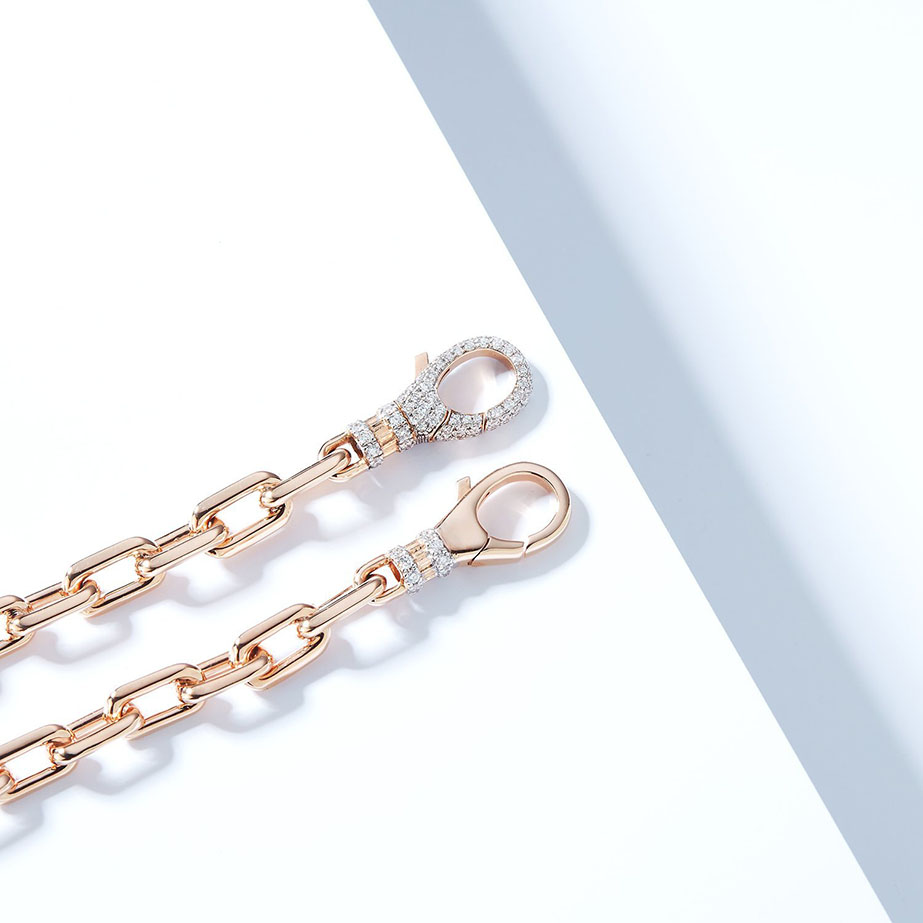
Rings Built for Daily Life
Our 316L steel rings handle hand washing, typing, and everything your day throws at them. A monthly buff keeps them gleaming.
Shop Rings → · Rollers Collection →
Earrings That Need Almost Nothing
316L steel earrings resist tarnish and corrosion — a quick wipe after wear is all they ask. Perfect for sensitive ears that react to everything else.
Shop Earrings → · Aura Collection →Pool, Beach, and Gym: When to Remove Jewellery
While 316L steel is highly resistant, there are environments where even the best materials benefit from a break:
- Swimming pools: Chlorine is a powerful oxidising agent. While 316L resists chlorine better than almost any other jewellery metal, prolonged exposure (think: an hour of lap swimming) can eventually dull the surface. Remove jewellery before getting in the pool. If you forget, rinse immediately with fresh water and dry thoroughly.
- The sea: Saltwater is corrosive to most metals over time. 316L was specifically developed to resist marine environments — it's used in boat fittings and underwater equipment — but salt crystals left to dry on the surface can create microscopic pitting if not rinsed off. A quick fresh-water rinse after a swim is all that's needed.
- The gym: Our pieces handle sweat perfectly well. However, if you use chalk (for weightlifting), grip powders, or sanitising sprays on equipment, it's best to remove rings first. These products often contain drying agents or alcohols that, while not harmful to the metal, can create a film that dulls the finish.
- Hot tubs and saunas: Remove jewellery. The combination of heat, moisture, and (in hot tubs) chlorine or bromine is unusually aggressive. Plus, fingers can swell slightly in hot water, making rings difficult to remove.
The universal rule: If your jewellery does get exposed to chlorine, saltwater, or heavy sweat, don't panic. Just rinse it with fresh water as soon as practical and dry it with your polishing cloth. 316L steel and PVD gold are forgiving materials — they don't permanently stain or corrode from occasional exposure. The key is not letting anything dry and sit on the surface for extended periods.
A Note on Ultrasonic Cleaners
Ultrasonic cleaners use high-frequency sound waves to create microscopic bubbles in a liquid solution. Those bubbles implode against the jewellery surface, dislodging dirt and debris. They're very effective — and they're also the most common cause of stone loosening in jewellery.
The vibrations can, over time, loosen stone settings — especially in pieces with multiple small stones. For solid metal pieces without stones, ultrasonic cleaning is generally safe. But for anything with set stones — rings with diamonds or moissanite, bracelets with pave settings, earrings with clustered gems — we recommend sticking with the manual cleaning method described above. It takes five minutes. It's gentler on settings. And it doesn't require an investment in equipment.
Jewellery Care Is Part of the Ritual
Caring for your jewellery isn't a chore. It's a small ritual — a few minutes of attention for the pieces that accompany you through your days. The necklace you wore to that important meeting. The ring that's been on your hand through a thousand handshakes and coffee cups. The bracelet that your partner gave you, or that you bought for yourself to mark something that mattered.
These pieces deserve care. Not because they're fragile — LOTTEDS pieces are built from materials engineered for endurance — but because the small act of maintenance is itself a form of appreciation. The monthly clean. The quick wipe after a rainy walk. The decision to store something properly rather than tossing it onto a dresser. These tiny gestures add up to years of brilliance.
And if you ever have a piece that needs more than routine care — a stone that's loosened, a clasp that's stiff, a finish that's seen better days — we're here. Our Lifetime Warranty covers manufacturing defects, and our concierge team can often help with maintenance issues even outside warranty coverage. Email info@lottedsteam.com with photos of your piece and we'll advise on next steps.
Read: PVD vs. Traditional Plating → · Read: Why Jewellery Turns Skin Green → · FAQ →
Leave a comment