

PVD vs. Traditional Plating — Why Our Gold Lasts for Years, Not Months
PVD vs. Traditional Plating: Why Our Gold Lasts for Years, Not Months
You purchase a gold necklace. It's stunning — that warm, honeyed glow against your collarbone. You wear it every day, because good jewellery is meant to be worn. It becomes part of your identity, the piece you reach for without thinking.
Then, three months in, something changes. The gold begins to look patchy. The colour shifts from rich warmth to a pale, washed-out yellow. The silver-grey metal underneath starts showing through at the edges. The piece that once made you feel polished now makes you feel… cheated. You paid for gold. You got a few months of gold. And now you're left with something that looks tired and worn.
This isn't your fault. It's not because you wore it too often or because your skin chemistry is unusual. It's the inevitable result of traditional electroplating — the industry standard that most affordable jewellery brands rely on. And once you understand how it works — and how PVD (Physical Vapour Deposition) is fundamentally different — you'll never view "gold-plated" jewellery the same way again. This knowledge will change how you shop for jewellery forever.
The Problem with Traditional Electroplating
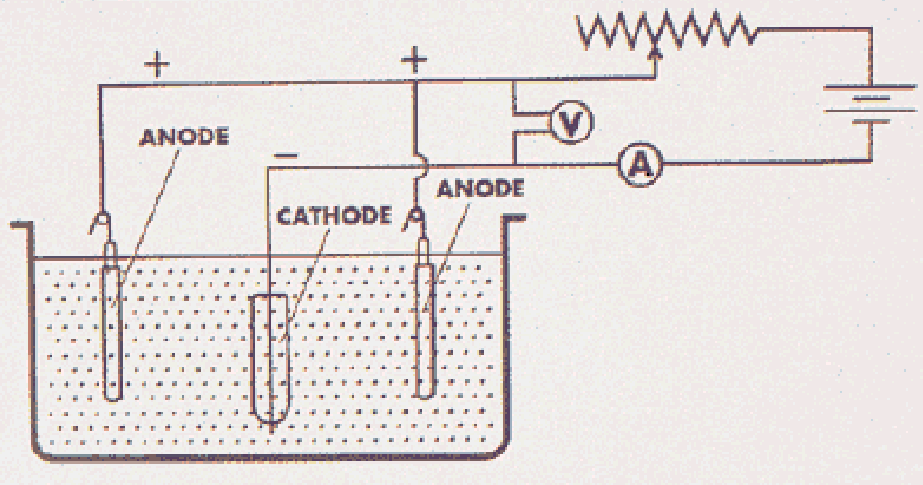
Traditional electroplating has been around since the early 19th century, and the basic principle hasn't changed much. A piece of base metal — typically brass, copper, or a low-grade steel — is submerged in a liquid solution containing dissolved gold ions. An electric current is passed through the solution, causing the gold ions to migrate toward the jewellery and adhere to its surface.
It sounds scientific. It is scientific. But the fundamental limitation is this: the gold is only sitting on top. It's a coating, not a bond. Think of it like spray-painting a car — the colour is on the surface, but it hasn't penetrated the metal. Scratch the paint, and the metal underneath is exposed.
The typical thickness of traditional gold electroplating on affordable jewellery is 0.5 to 2.5 microns. For perspective: a single human hair is approximately 70 microns thick. A sheet of standard printer paper is about 100 microns. The gold layer on most "gold-plated" jewellery is literally thinner than a strand of spider silk. And because it's just sitting on the surface, it wears away — from sweat, from perfume, from hand washing, from the simple friction of your sleeve against your wrist. Within weeks or months, the gold is gone. The cheap metal beneath is exposed. And the piece you loved becomes unwearable.
This is not a design flaw. This is the intended outcome of a business model that depends on you replacing your jewellery frequently. The faster it wears out, the sooner you buy another. It's planned obsolescence — applied to the things you wear against your skin.
What Is PVD? The Swiss Watch Industry's Secret
PVD stands for Physical Vapour Deposition. It's not a coating process — it's a bonding process. And it's the same technology used by the most prestigious Swiss watch manufacturers to create gold, rose gold, and black finishes that endure for decades of daily wear.
Here's how it works, step by step:
- The Vacuum Chamber: The jewellery piece — already crafted from 316L stainless steel and polished to a mirror finish — is placed inside a sealed vacuum chamber. All air is evacuated, creating a pristine, contamination-free environment.
- Vaporisation: Solid 18K gold — real, genuine 18-karat gold — is bombarded with high-energy ions until it transforms from a solid directly into a plasma state. This is the "vapour" in Physical Vapour Deposition.
- Acceleration: The gold plasma is accelerated toward the jewellery surface using electromagnetic fields. The gold particles are travelling at extremely high velocity when they strike the metal.
- Molecular Embedding: This is the crucial step. Because of the high energy, the gold particles don't just land on the surface — they physically embed themselves into the crystal lattice of the 316L steel. The gold becomes part of the metal's surface structure, not a separate layer on top of it.
- Cooling and Bonding: As the piece cools, the gold atoms are locked into place at the molecular level. The bond is not adhesive — it's metallic. The gold and the steel are now essentially one material at the surface.
The result is a gold finish that does not flake, does not peel, does not wear away to reveal a different metal underneath — because there is no "underneath." The gold is the surface, permanently.
In plain terms: Traditional electroplating is like painting a wall — the colour sits on top and chips off over time. PVD is like dyeing fabric — the colour penetrates the material and becomes part of it. One is temporary by design. The other is permanent by physics.
Side-by-Side: Traditional Plating vs. PVD
| Feature | Traditional Electroplating | PVD (LOTTEDS Standard) |
|---|---|---|
| Bond Type | Surface adhesion — gold sits on top | Molecular bond — gold becomes part of the surface |
| Typical Thickness | 0.5–2.5 microns | Embedded into the metal surface — not measurable as a separate layer |
| Longevity | 3–12 months with daily wear | 3–5+ years with daily wear; many customers report 5+ years |
| Sweat Resistance | Low — sweat accelerates wear | High — sweat does not degrade the bond |
| Colour Uniformity | Can appear patchy; thin spots wear faster | Perfectly uniform across the entire piece |
| Skin Safety | Once worn through, exposes reactive base metal (often brass or nickel) | Base metal is 316L steel — hypoallergenic even if exposed |
| Cost Over 5 Years | Replaced 3–5 times; total cost exceeds a single quality piece | One purchase. Five years of wear. Lower cost per wear. |
| Used By | Fast fashion, costume jewellery, high-volume marketplaces | Luxury Swiss watches, medical implants, high-end electronics, LOTTEDS |
Why Doesn't Everyone Use PVD?
If PVD is so superior, why isn't it the industry standard? The answer comes down to three words: cost, expertise, and time.
PVD equipment is expensive. A single industrial PVD chamber costs between €50,000 and €500,000 depending on size and capability. The process requires precise temperature control (often within ±5°C), ultra-clean vacuum environments, and operators trained in both the physics of plasma deposition and the metallurgy of the materials being coated. It takes longer per piece than traditional electroplating — roughly 30–90 minutes per batch versus minutes for a dip-and-plate operation. And because the gold is actually being consumed into the metal surface, more gold is used per piece — not less.
For a fast-fashion jewellery brand producing millions of units per year, switching from electroplating to PVD would require a capital investment that could run into millions of euros. That's not compatible with a business model built on high volume at low margins. So they stick with electroplating — and you keep replacing your jewellery every few months.
At LOTTEDS, we made a different calculation. Our founder, Livia, had spent 12 years hearing from customers whose "gold" jewellery faded within months. When she started this company, she established that every piece must not only look beautiful on day one — it must continue to look beautiful after years of daily wear. PVD was not an optional upgrade. It was the only acceptable standard.
Is PVD Gold "Real" Gold?
Yes. Unequivocally. The gold we use in our PVD process is genuine 18-karat gold — the same gold you'd find in a solid 18K piece. The difference is not in what the gold is, but in how it's applied. Rather than forming a thick, soft, easily scratched layer (as solid gold does), PVD gold is atomically bonded to the surface of 316L steel — giving you the warm, luxurious colour of gold with the strength and resilience of surgical-grade steel. It's the best of both materials, in a way that neither could achieve alone.
Because PVD bonds the gold so effectively, you actually get more value from the gold used: it stays on your jewellery, maintaining its colour, rather than rubbing off onto your skin, your clothes, or your bathroom counter.
The Bottom Line
You shouldn't have to replace your favourite necklace every year because the gold faded. You shouldn't have to "save" your good jewellery for special occasions because you're afraid daily wear will destroy it. And you absolutely shouldn't have to pay solid-gold prices to get a finish that survives the reality of your life — hand washing, rain, sweat, perfume, the friction of a busy day.
That is the promise of PVD. That is the LOTTEDS standard. Whether you're shopping for PVD gold necklaces, bracelets that keep their glow, rings that won't fade, or earrings that look as good in year three as they did on day one, every piece carries the same molecular-level commitment to longevity.

PVD Gold in Action
Our Bob Collection and Giorno Collection pieces feature PVD 18K gold that stays brilliant through daily wear. See the difference molecular bonding makes.
Bob Collection → · Giorno Collection →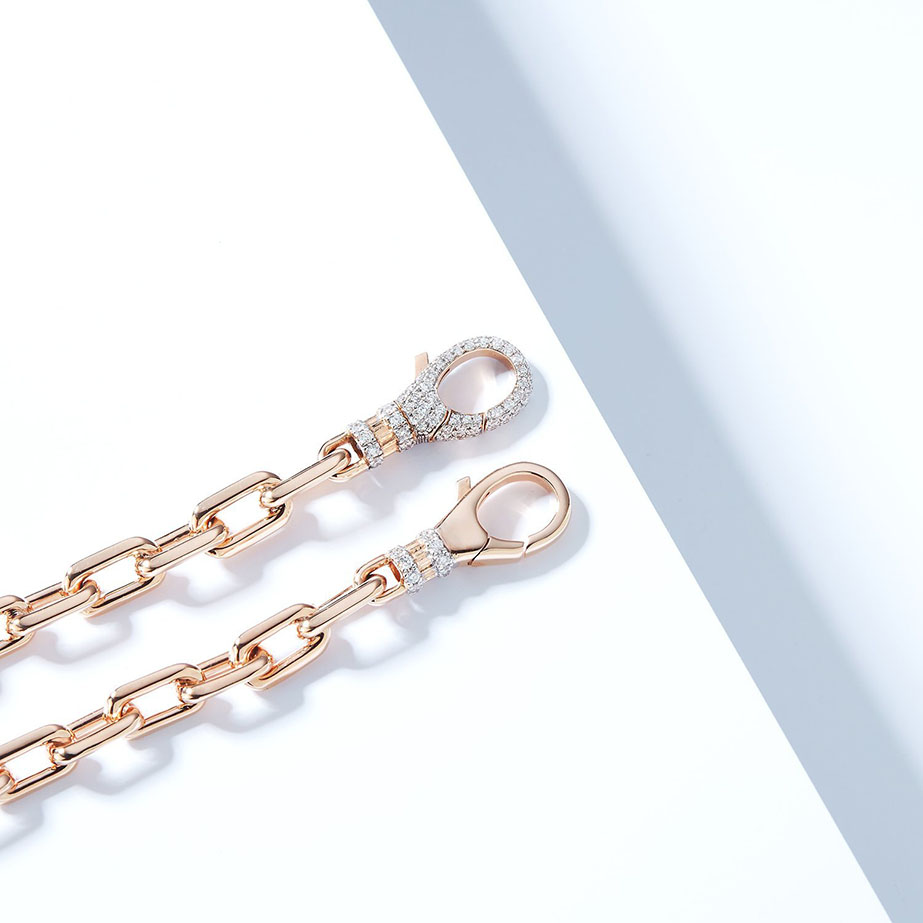
Rings That Keep Their Glow
Unlike traditional plating, our PVD-finished rings maintain their colour through hand washing, typing, and everything your hands do in a day. Years of wear, not months.
Shop Rings → · Hot Sale →Read: Why Jewellery Turns Skin Green → · Sustainability → · The True Cost of Cheap Jewellery →
Leave a comment