

What Is 316L Stainless Steel?
What Is 316L Stainless Steel? The Surgical-Grade Secret Behind Our Jewellery
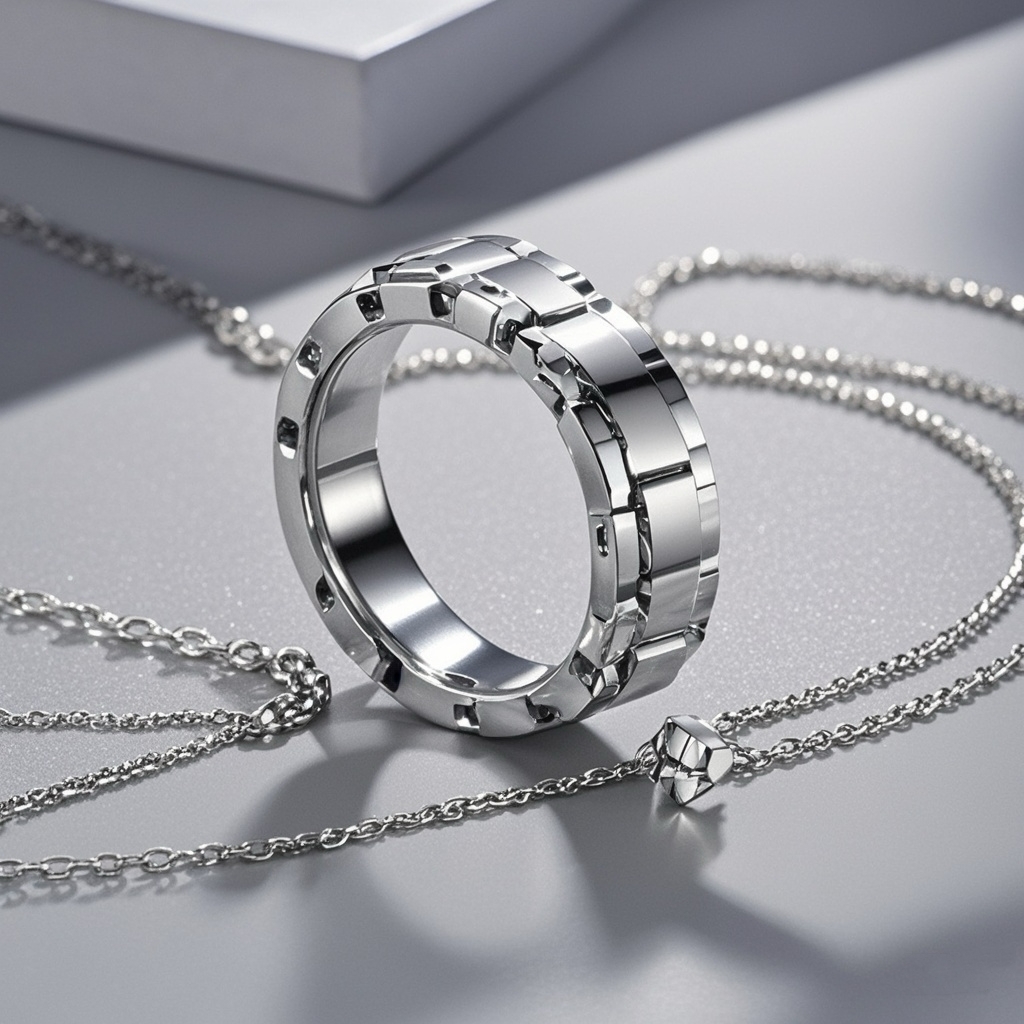
When most people hear "stainless steel," they think of kitchen sinks, cutlery, or perhaps a watch band. It's an industrial material — functional, durable, but not something you'd associate with fine jewellery. And for most types of stainless steel, that assessment would be correct. The steel in your sink is not the steel in our jewellery. The steel in your cutlery is not the steel in our jewellery. And the steel in that cheap bracelet you bought on holiday — the one that turned your wrist green within a week — is most definitely not the steel in our jewellery.
The material we use at LOTTEDS — 316L stainless steel — has a pedigree that most people never learn about. It's been inside human bodies for decades. It's been to the deepest parts of the ocean and the vacuum of space. It's the material that surgeons trust to replace hip joints, that watchmakers trust to protect delicate movements, and that marine engineers trust to withstand constant saltwater immersion. And it's quietly become the ideal foundation for jewellery designed to be worn every single day — without irritation, without corrosion, and without compromise.
What Does "316L" Actually Mean?
Stainless steel is not one material. It's a family of alloys — iron mixed with chromium, nickel, molybdenum, and other elements in precise proportions — each optimised for different applications. The numbers and letters tell you exactly what's in it and how it will perform.
316 refers to the specific grade within the austenitic stainless steel family. The key addition that distinguishes 316 from the more common 304 grade (used in kitchen appliances) is molybdenum — typically 2–3% of the alloy. Molybdenum dramatically improves resistance to corrosion, particularly from chlorides (salt) and acids. This is why 316 is specified for marine environments and chemical processing equipment, while 304 is fine for indoor applications where it won't encounter salt or harsh chemicals.
L stands for low carbon — specifically, a maximum carbon content of 0.03% (compared to 0.08% for standard 316). Low carbon content is crucial for two reasons: it prevents a phenomenon called "sensitisation," where carbon reacts with chromium at high temperatures to form chromium carbides at grain boundaries, depleting the surrounding area of the chromium that provides corrosion resistance; and it makes the alloy easier to work with at high precision, allowing for tighter tolerances and finer surface finishes. For jewellery, where pieces are cast, polished, and sometimes welded, low carbon content ensures the material retains its corrosion resistance and surface quality through every stage of manufacturing.
In plain terms: 316L is the premium, medical-grade version of stainless steel. It's more corrosion-resistant, more biocompatible, and more suitable for prolonged skin contact than any other common stainless steel grade. And it's the only stainless steel we use.
The Chemical Recipe
For those who appreciate precision — and European consumers tend to — here's the exact composition of 316L stainless steel, as specified by ASTM International and EN standards:
| Element | Percentage | Role in the Alloy |
|---|---|---|
| Iron (Fe) | 62–69% | Base metal — provides structural strength |
| Chromium (Cr) | 16–18% | Forms a passive oxide layer that prevents rust — this is what makes it "stainless" |
| Nickel (Ni) | 10–14% | Stabilises the austenitic crystal structure; improves ductility and formability. Note: the nickel is metallurgically bound in the crystal lattice and does not leach out — hence why 316L passes the EU Nickel Directive (EN 1811) for prolonged skin contact |
| Molybdenum (Mo) | 2–3% | The key differentiator from 304 steel — dramatically improves resistance to chlorides, acids, and pitting corrosion |
| Manganese (Mn) | ≤2% | Improves hot-working properties and strength |
| Silicon (Si) | ≤1% | Deoxidiser — helps remove oxygen during melting |
| Carbon (C) | ≤0.03% | The "L" in 316L — ultra-low carbon prevents corrosion at weld points and improves precision machinability |
| Phosphorus (P) | ≤0.045% | Residual element — kept low to maintain ductility |
| Sulphur (S) | ≤0.03% | Residual element — kept low to maintain corrosion resistance |
This precise composition is not proprietary — 316L is an open international standard, specified by ASTM A240/A240M and EN 10088-2. Any manufacturer can produce it. But not all manufacturers do — because the higher molybdenum and lower carbon content make 316L more expensive to produce than common 304 steel. As with everything in materials science, you get what you pay for.
Where You've Already Encountered 316L (Without Knowing It)
One of the most compelling arguments for 316L as a jewellery material is that it's already trusted in far more demanding applications than sitting against your skin. Here's where this alloy is used — and why each application matters for jewellery:
Surgical Implants
Hip replacements, bone plates, orthopaedic screws, and dental implants are routinely made from 316L. The human body does not reject it. It does not corrode in the warm, saline environment of living tissue. It does not release harmful ions. If surgeons trust it to remain inside a human body for decades, it's more than safe enough to wear on your skin.
Luxury Watches
Rolex used 904L steel for many years, but the vast majority of high-end Swiss watch cases — from Omega to TAG Heuer to entry-level Rolex models — are machined from 316L. It's chosen for its ability to take a mirror polish, its resistance to sweat and saltwater, and its hypoallergenic properties on the wrist. If it's good enough for a €5,000 watch case, it's good enough for a bracelet.
Aerospace Components
Aircraft fittings, fasteners, and structural components exposed to extreme temperatures and pressures rely on 316L. It maintains its strength and corrosion resistance from -200°C to over 800°C. Your jewellery won't experience those extremes, but the fact that the material can handle them speaks to its fundamental stability.
Marine Equipment
Boat fittings, underwater camera housings, propeller shafts, and desalination plant components use 316L because it resists constant saltwater immersion without pitting or crevice corrosion. The same molybdenum that protects a boat propeller in the Mediterranean protects your necklace when you swim in it.
Food & Pharmaceutical Processing
316L is the standard material for pharmaceutical manufacturing equipment, dairy processing, and brewing tanks. It doesn't react with food, doesn't leach into products, and can be sterilised repeatedly without degradation. Your skin is less demanding than a sterile pharmaceutical environment.
Body Piercing
Professional piercers recommend 316L for initial piercings — because it's biocompatible, non-reactive, and can be sterilised in an autoclave. If it's safe for a healing wound, it's safe for a healed earlobe.
Why Livia Chose 316L for LOTTEDS
When our founder, Livia, set out to create jewellery that would never irritate skin, she tested a wide range of materials before settling on 316L. Her criteria were exacting:
- Must not react with human skin. This eliminated brass immediately (copper salt reactions = green marks) and all nickel-containing alloys that fail the EU Nickel Directive.
- Must be strong enough for daily wear. This eliminated pure silver (too soft — bends and scratches easily) and pure gold (even 18K gold is soft enough to deform under pressure).
- Must resist corrosion from sweat, water, and the chemicals of daily life. This eliminated standard 304 stainless steel (no molybdenum — vulnerable to chloride pitting) and most plated metals (the plating wears through).
- Must be lightweight enough for comfortable all-day wear. This eliminated tungsten and most other high-density alloys (too heavy for larger pieces).
- Must be workable into fine, detailed designs. This eliminated titanium (excellent for biocompatibility, but extremely difficult to cast and engrave with fine detail).
316L stainless steel was the only material that satisfied every criterion. It's not the cheapest option — there's a reason fast-fashion jewellery uses brass. It's not the easiest to work with — casting 316L requires higher temperatures and tighter tolerances than casting gold or silver. But it is, by every objective measure, the best material for jewellery that's designed to be worn every day by people who refuse to tolerate irritation.
The LOTTEDS material standard: We never use brass, copper, or nickel-releasing alloys as a base metal. Every piece starts with 316L surgical-grade stainless steel. For silver designs, we use solid 925 sterling silver. For enhanced surface hardness on specific pieces, we use 316L with a titanium finish. And when we apply gold, it's PVD-bonded 18K — not painted on, but embedded at the molecular level. How PVD works →
316L vs. Gold: An Honest, Data-Driven Comparison
We love the look of gold. That's precisely why we use PVD-bonded 18K gold on many of our pieces. But as a base metal — as the structural foundation of a piece of jewellery — 316L steel has several objective advantages over gold:
| Property | 316L Stainless Steel | 18K Solid Gold | 14K Solid Gold |
|---|---|---|---|
| Hardness (Vickers) | ~155 HV | ~125 HV | ~150 HV |
| Scratch Resistance | Excellent | Moderate — scratches accumulate visibly over time | Good — but softer than 316L |
| Weight | ~8.0 g/cm³ | ~15.5 g/cm³ (nearly twice as heavy) | ~13.5 g/cm³ |
| Corrosion Resistance | Excellent — resists chlorides, sweat, saltwater | Excellent — gold is inert | Good — but copper content can oxidise |
| Skin Reactivity | Hypoallergenic — no nickel release (passes EN 1811) | Hypoallergenic for most (unless nickel alloyed in white gold) | Possible nickel or copper reaction in some individuals |
| Density (Weight Feel) | Light and comfortable for all-day wear | Heavy — can feel fatiguing on larger pieces | Moderate |
| Price (per gramme, approx.) | ~€0.04 | ~€65 | ~€40 |
| Sustainability | 85%+ global recycling rate; fully recyclable without quality loss | Mining generates ~20 tonnes toxic waste per ring; recycling exists but mining still dominates supply | Same as 18K |
What this table shows is that 316L is not a "cheap alternative" to gold — it's a performance upgrade in several key areas: scratch resistance, weight comfort, skin safety (versus nickel-alloyed white gold), and sustainability. It's also dramatically less expensive, which allows us to offer pieces at prices that reflect what they actually cost to make, rather than what a commodity market has decided a material is worth. How we price our jewellery →
Is 316L Heavy?
Surprisingly, no. Despite its strength, 316L is significantly lighter than gold. A gold ring of equivalent size weighs nearly twice as much as a 316L ring. This is one of those differences that you don't think about until you experience it — a 316L bangle that looks substantial actually feels light and comfortable on the wrist. A 316L necklace sits gracefully on the collarbone without pulling. Bold statement pieces that would be fatiguing in solid gold become wearable all day in 316L.
This is not an accident. It's a direct consequence of the material's density. And it's one of the reasons our customers tell us they "forget they're wearing" their LOTTEDS pieces — which is, for us, the highest compliment.
The EU Compliance Question
European consumers are rightly concerned about what touches their skin. The EU has some of the world's strictest regulations governing metal release from jewellery. Here's how 316L performs:
- EU Nickel Directive (EN 1811): 316L stainless steel has been tested extensively and consistently demonstrates nickel release well below the 0.5 μg/cm²/week threshold. The nickel in 316L is metallurgically bound in the austenitic crystal structure — it does not leach out under normal conditions of skin contact. This is fundamentally different from nickel-plated jewellery, where a layer of pure nickel sits on the surface and releases ions freely.
- REACH Regulation (EC 1907/2006): 316L contains no Substances of Very High Concern (SVHCs). All constituent elements are registered and authorised under REACH for their respective applications.
- ISO 10993: This is the international standard for biological evaluation of medical devices. 316L has been tested to ISO 10993 for cytotoxicity, sensitisation, and irritation — and passes. It's approved for long-term implantation in the human body.
In practical terms, this means that a LOTTEDS piece made from 316L is one of the safest things you can put against your skin. It's been tested more rigorously than almost any other jewellery material — because the standards for medical implants are higher than the standards for jewellery. We happen to meet both. Read our full EU compliance guide →
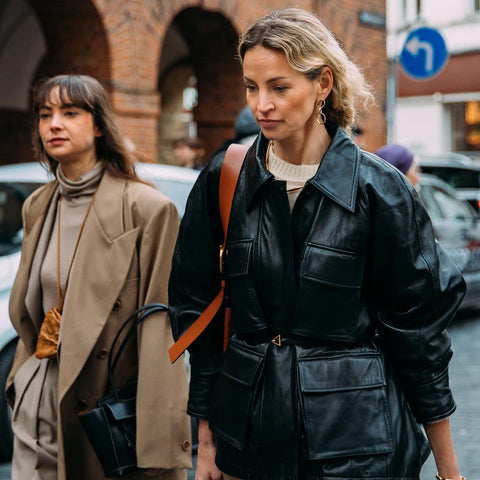
316L Earrings for Sensitive Ears
If your ears react to everything, try our 316L steel earrings. The same biocompatible alloy used in surgical implants — now in designs you'll want to wear every day.
Shop Earrings → · Aura Collection →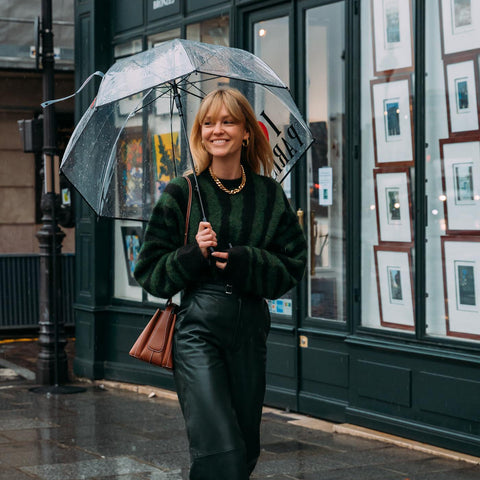
Necklaces You'll Forget You're Wearing
Our 316L necklaces are nearly half the weight of gold equivalents — all the presence, none of the fatigue. PVD gold finish optional.
Shop Necklaces → · Snake Collection →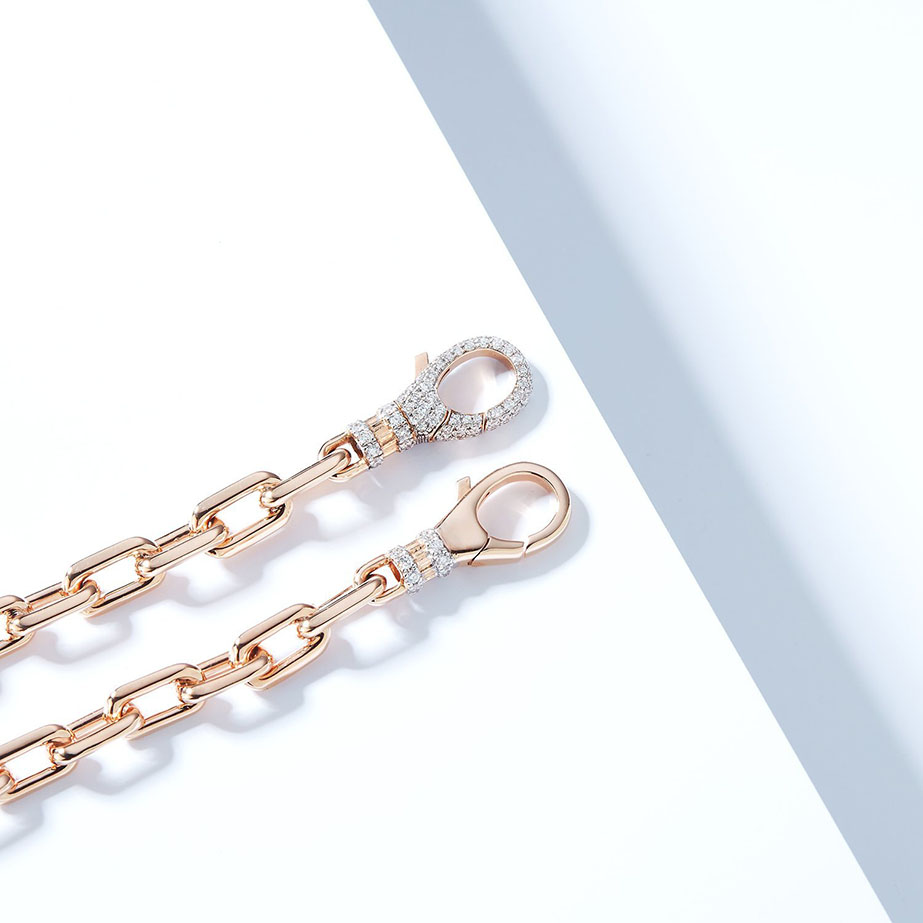
Rings That Handle Everything
316L rings resist scratches and corrosion better than gold. Wear them to the gym, in the shower, through a thousand handshakes.
Shop Rings → · Rollers Collection →The Bottom Line
316L stainless steel is not a compromise. It's an upgrade — chosen not because it's cheaper than gold (though it is), but because it's better for the job: stronger, lighter, safer for skin, more resistant to the rigours of daily life, and dramatically more sustainable. The fact that it costs less is a function of a rational market — not a reflection of quality.
When you buy a LOTTEDS piece, you're buying jewellery built on a foundation that surgeons, watchmakers, aerospace engineers, and marine architects have trusted for decades. It's the same material. The same standards. The same performance. Just applied to something more personal.
Read: Why Jewellery Turns Skin Green → · EU Jewellery Regulations → · Sustainability →
Dejar un comentario