

Stacking 101
Stacking 101: How to Build Your Perfect Jewellery Wardrobe
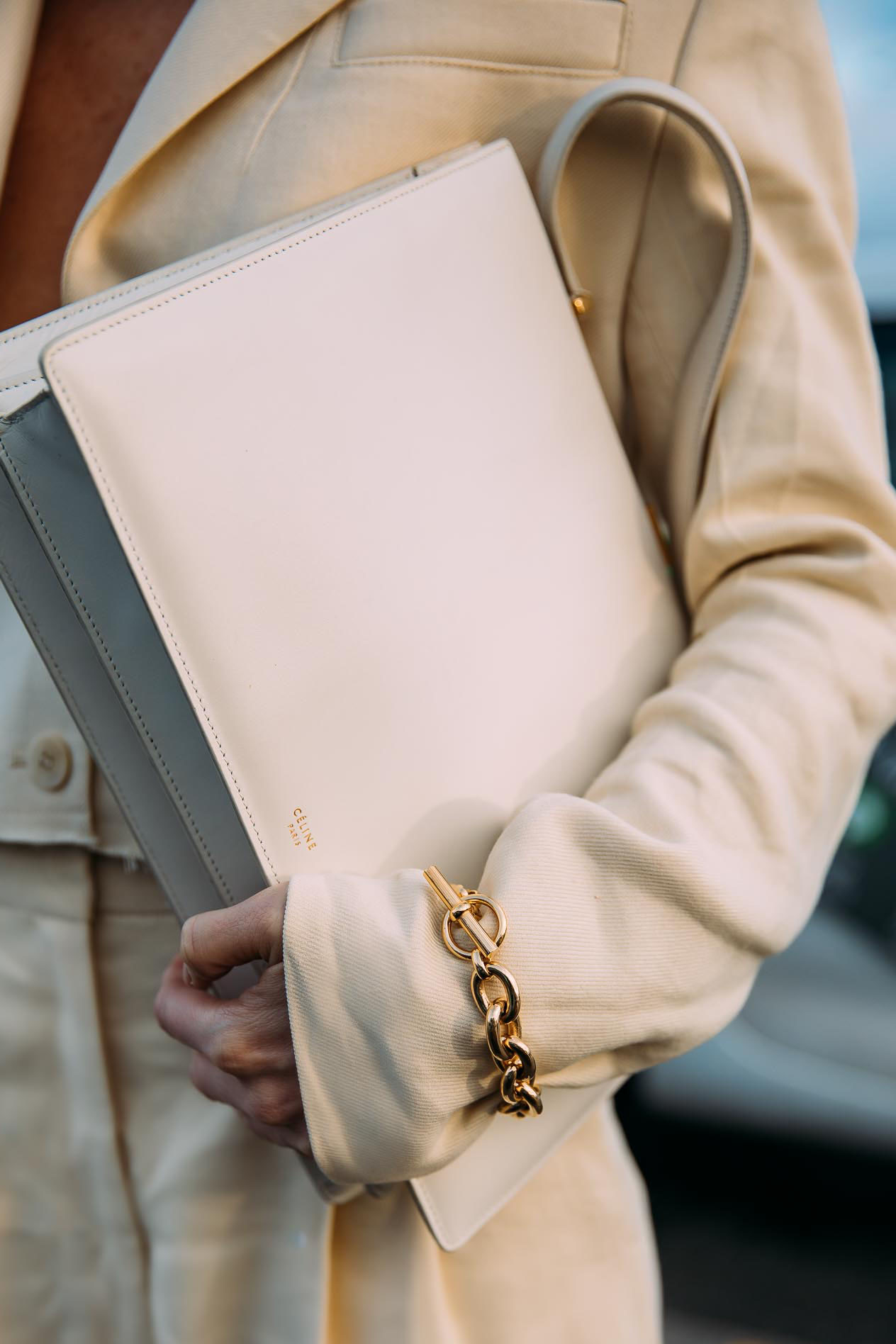
There's a particular kind of elegance that looks effortless. The woman whose bracelets seem to have fallen into perfect conversation with each other. The hand where every ring feels like it belongs exactly where it sits. The neckline where chains of different lengths create a composition that draws the eye without shouting for attention.
This is the art of stacking — and despite how effortless it looks when done well, it's rarely accidental. Behind every beautifully layered wrist or perfectly composed hand is a set of principles that anyone can learn. The good news is that these principles are simple. The better news is that LOTTEDS pieces — lightweight 316L steel, PVD gold that doesn't scratch when pieces touch, hypoallergenic surfaces that stay comfortable even when worn in multiples — are practically designed for stacking.
The One Rule That Governs Everything
Before we get into specific formulas for wrists, hands, necks, and ears, there's a single principle that makes stacking work across every category: vary the weight, unify the metal.
What this means in practice: mix thick and thin pieces. A substantial chain next to a delicate one. A bold bangle beside a fine band. A chunky ring adjacent to a barely-there stacker. The contrast in visual weight creates rhythm — like a well-composed photograph where foreground and background are in conversation, or a piece of music where loud and soft passages give each other meaning.
But keep the metal tone consistent. All warm gold. All cool white gold or silver. Or — and this is the advanced move — mix metals with deliberate intention. One rose gold accent in a sea of yellow gold can look editorial. Randomly mixing whatever you happen to own often looks scattered. The difference is intentionality.
Why does this matter for LOTTEDS wearers? Because our PVD gold finish is available in consistent shades across every collection — the warm gold on a Snake chain is identical to the warm gold on a Rollers band. This means pieces from different collections stack together as though they were designed as a set. They weren't. But the colour consistency makes it look like they were.
Bracelet Stacking: The Wrist Wardrobe
The wrist is where stacking really shines. It's visible when you gesture, when you reach for something, when you push up your sleeves. It's the part of your jewellery wardrobe that people notice most — and it's also the most forgiving. Bracelets don't need to fit with the precision of rings. They don't tangle as easily as necklaces. They're the ideal starting point for anyone new to stacking.
Here are four foolproof bracelet formulas, each with a different personality:
Formula 1: The Classic Trio
One chain bracelet + one bangle + one slider. The chain adds texture and movement. The bangle adds structure and a satisfying weight. The slider bridges them — it can be repositioned along the wrist to balance the composition. This formula works for the office, for dinner, for everywhere between. It's the little black dress of bracelet stacking.
Try: Snake chain + Rollers bangle + adjustable slider
Formula 2: The Bangle Stack
Three to five bangles of varying widths — all same metal tone. The key here is spacing: mix wide and narrow, textured and smooth. A 6mm bangle next to a 2mm bangle next to a 10mm bangle. The irregular rhythm is what makes it interesting. Our Rollers Collection and Gear Collection are designed specifically for this — geometric bands in different widths that stack together like they were planned.
Try: 3–5 Rollers bands in alternating widths, or mix Rollers with Gear
Formula 3: The Layered Chain
Two to four chain bracelets of different link styles — snake chain, cable chain, Figaro chain, curb chain — plus one with a subtle stone accent. The different link patterns catch light differently, creating a dynamic, shimmering effect as your wrist moves. This is the most tactile of the bracelet formulas — the chains slide over each other with a quiet, satisfying whisper.
Try: 2–3 Snake chains in different widths + 1 Giorno chain with moissanite accent
Formula 4: The Eclectic Mix
One of everything: a chain, a bangle, a beaded bracelet, a leather or fabric band, and a piece with personal significance — a charm, an engraved plate, something that tells a story. This formula is harder to get right because there's no template, but the result is uniquely yours. The unifying element is the metal tone: keep all the metal components in the same colour family, and the non-metal elements will read as intentional accents rather than random additions.
Try: Snake chain + Rollers bangle + Spiga textured chain + your own charm bracelet
Pro Tip: The Comfort Rule. If your stack makes noise every time you type or gesture — a loud clanking, not a gentle whisper — it's too much. A good stack should be felt, not heard. LOTTEDS pieces are lightweight enough to stack without clanking: 316L steel is nearly half the density of gold, so even four or five bracelets feel comfortable on the wrist. If you've ever taken off a stack of gold bracelets at the end of the day because your wrist felt tired, you'll notice the difference immediately.

Build Your Bracelet Stack
Start with a Snake chain as your foundation, add a Rollers bangle for structure, and finish with a Giorno accent piece. All in matching PVD gold — all hypoallergenic.
Shop Bracelets → · Snake →Ring Stacking: The Finger Composition
Ring stacking is the most personal form of jewellery layering. Your hands are constantly in view — to you, if not always to others. The rings you wear become part of your physical sense of yourself. You fidget with them. You feel their weight when you gesture. They're more intimate than any other jewellery except perhaps a wedding band.
Ring stacking principles differ slightly from bracelets because the spaces are smaller and the proportions more critical. Here are the key formulas:
Formula 1: The Single Statement
One bold ring — a Bob Collection piece with lab-grown diamonds or moissanite — worn alone on the index or middle finger. No other rings on that hand. The solitude is the statement. This is for the woman who wants one thing to say everything. It's confident. It's uncluttered. It draws the eye directly to the ring and nowhere else.
Try: A Bob statement ring on the index finger — the hand's most expressive digit
Formula 2: The Graduated Trio
Three rings on one hand — a larger centre ring flanked by two thinner bands. The centre ring sits on the middle or ring finger. The thinner bands go on adjacent fingers. The visual effect is of a central focal point with supporting harmony on either side. This is perhaps the most universally flattering ring composition.
Try: A Bob ring on the ring finger + Rollers slim bands on index and pinky
Formula 3: The Full Hand
Rings on four or five fingers — but keep the designs small to medium. A hand covered in large, chunky rings feels heavy and costumey. A hand scattered with delicate bands and small stones feels curated and intentional. The key is restraint in the individual pieces, which creates impact through repetition.
Try: Rollers slim bands on every finger, alternating gold and silver tones for the advanced version
Formula 4: The Knuckle-to-Knuckle Stack
Multiple thin rings stacked on a single finger — usually the index or middle finger — from the base of the finger up toward the knuckle. This is a look borrowed from traditional Indian and Middle Eastern jewellery, where stacks of slim bands (sometimes ten or more) create a continuous column of metal. For a modern European interpretation, keep it to 3–5 slim bands on one finger.
Try: 3–5 Rollers slim bands stacked on the index finger
Pro Tip: Mind the Gap. Rings on adjacent fingers shouldn't press against each other. The constant friction is uncomfortable and, over time, can wear down even the most durable finish. A gap of 1–2mm between rings looks intentional and prevents irritation. If your rings are pressing together, size up slightly — a ring that's a quarter-size larger than "perfect" will sit comfortably without sliding off.
Start Your Ring Stack
Begin with a Rollers band as your foundation, add a Bob piece for the focal point, and flank with slim bands on adjacent fingers.
Shop Rings → · Rollers →Necklace Layering: The Collarbone Composition
Necklace layering is the most visible form of stacking — and the easiest to get wrong. Unlike bracelets and rings, which sit on relatively contained areas of the body, necklaces occupy the most prominent visual real estate: your neckline, your collarbone, the space that frames your face. A poorly layered neckline looks cluttered and distracting. A well-layered one looks like a deliberate composition.
The golden rule: different lengths, different weights. Each necklace needs its own space. If two chains sit at exactly the same length, they'll tangle. If they're too close in visual weight, they'll compete rather than complement.
Formula 1: The Cascade (16" + 18" + 20")
The classic three-necklace cascade. A short chain or choker at 16 inches (40cm). A medium pendant or slightly heavier chain at 18 inches (45cm). A longer drop, perhaps with a small charm or stone, at 20 inches (50cm). Each sits in its own space. Each frames the one above it. Together they create a descending rhythm that draws the eye downward and elongates the neck.
Try: Snake choker at 16" + Giorno pendant at 18" + long chain at 20"
Formula 2: One Bold, One Delicate
A statement necklace — like a Bob Collection piece with architectural presence — worn with a fine, barely-there chain underneath. The fine chain fills the empty space on the skin without competing with the statement piece. The statement piece does the work. The delicate chain is the supporting actor — essential to the composition, but never stealing the scene.
Try: Bob statement necklace + a slim Snake chain at a slightly longer length
Formula 3: The Single Long Chain
Skip the layering entirely and let one long chain — 22 to 30 inches (55–75cm) — be the entire composition. This is especially effective with open necklines: a deep V, a boat neck, anything that leaves a generous expanse of skin. The long chain draws the eye vertically, creating a lengthening effect. It's the simplest formula and often the most striking.
Try: A long chain at 24–28", worn alone against a simple top or dress

Layer Your Neckline
Start with a Snake choker, add a Giorno pendant, and finish with a long chain. All in the same PVD gold tone for a cohesive cascade.
Shop Necklaces → · Shop Pendants →Ear Stacks: The Curated Ear
The "curated ear" — multiple earrings distributed across the lobe, helix, and upper ear — has become one of the defining jewellery trends of the decade. It's also one of the most personal. An ear stack tells a story about its wearer: the mix of studs and hoops, the distribution of stones, the balance between delicate and bold.
The principle is the same as rings: vary size from lobe upward. The largest piece goes on the lobe — that's the anchor. Medium pieces occupy the second hole or the helix. The smallest pieces — tiny studs or climbers — go at the top. This creates a natural visual flow from bottom to top, mimicking the way the ear itself tapers.
The Classic Curated Ear
A bold hoop or statement stud on the lobe. A medium pavé or small geometric piece in the second hole. A tiny stud or climber at the helix. Three pieces, three sizes, one unified metal tone.
Try: Statement hoop on lobe + Aura stud in second hole + Starlet Shimmer tiny stud at helix
For Sensitive Ears: If you've ever experienced irritation from earrings — redness, itching, swelling — the culprit is almost certainly nickel in the metal. LOTTEDS earrings are made from 316L surgical-grade stainless steel, the same biocompatible alloy used in medical implants. They pass the EU Nickel Directive (EN 1811) for prolonged skin contact. This means you can build an ear stack without worrying that one of the pieces will cause a reaction — even in newly pierced or sensitive ears. Learn more about nickel-free jewellery →
The LOTTEDS Advantage for Stacking
Stacking with traditional jewellery can be uncomfortable. Solid gold pieces are heavy — their density (15.5 g/cm³ for 18K gold) means that multiple bracelets or rings add up quickly on the body. By the end of a long day, a wrist loaded with gold bangles can feel fatigued. A hand covered in gold rings can feel weighed down.
LOTTEDS pieces are built on 316L stainless steel, which has a density of approximately 8.0 g/cm³ — nearly half that of gold. This means you can stack four LOTTEDS bracelets and experience roughly the same weight as two gold ones. You can wear rings on every finger and still gesture freely. You can layer necklaces without feeling like you're wearing armour.
Additionally, our PVD gold finish is bonded at the molecular level — it doesn't scratch or wear away when pieces rub against each other in a stack. Traditional electroplated jewellery, by contrast, shows wear quickly when stacked because the thin surface layer is abraded by metal-on-metal contact. With LOTTEDS, your stack looks as good after a year of daily wear as it did on the day you assembled it.
And because every piece is hypoallergenic, you can stack without worrying that one of the pieces will irritate your skin — even in warm weather, even during exercise, even when worn for 16 hours straight.
Building Your First Stack: A Simple Starting Point
If you're new to stacking, start small. Choose two bracelets — perhaps a Snake chain and a Rollers bangle in the same metal tone. Wear them together for a week. Notice how they interact — how the chain moves against the bangle, how they catch the light differently, how they feel on your wrist throughout the day. Then add a third piece. Then experiment with rings.
Stacking is not about rules. It's about developing an eye — learning what feels right on your body, what proportions please you, what combinations make you glance at your own wrist and smile. The formulas in this guide are starting points, not prescriptions. The goal is not to replicate someone else's stack. It's to build your own.
Laissez un commentaire