

Why Your Jewellery Turns Skin Green
Why Your Jewellery Turns Skin Green — And What We Do Differently
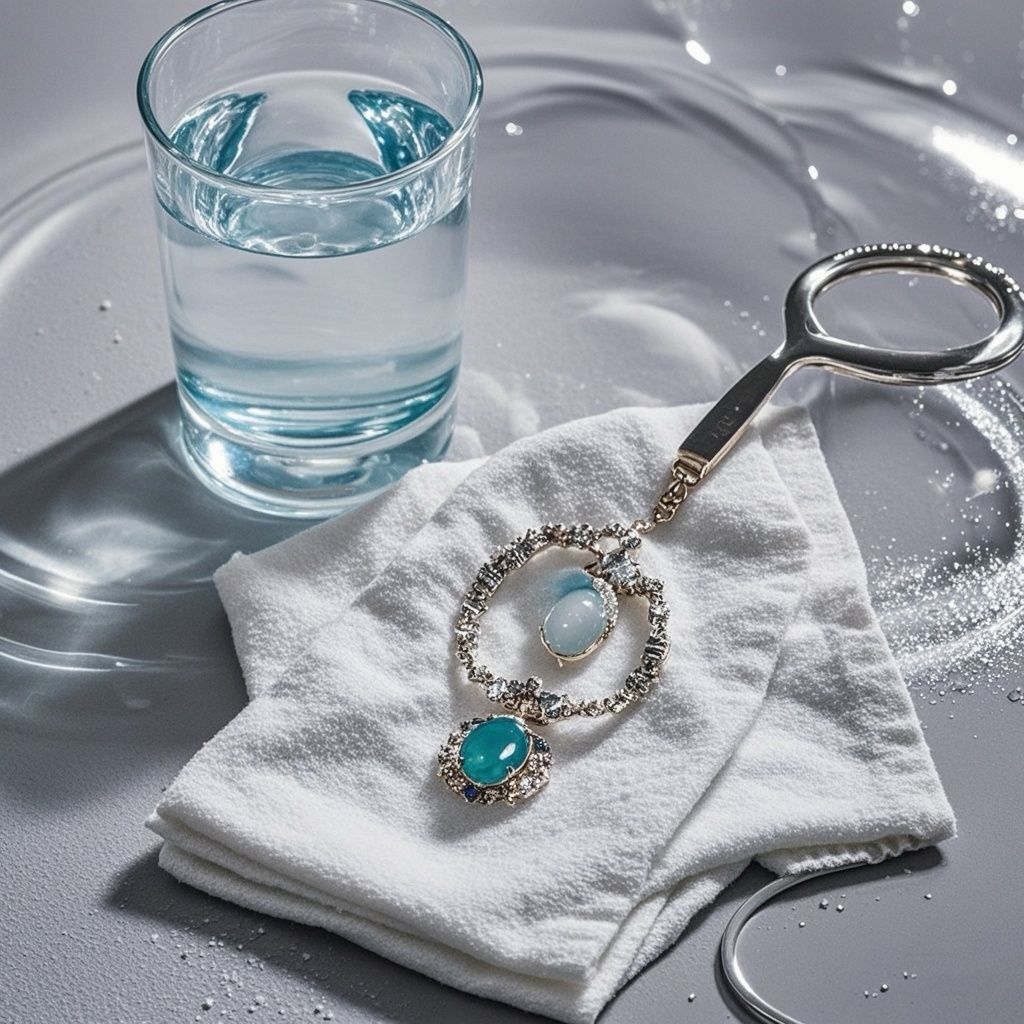
You've been there. You buy a beautiful ring or necklace — perhaps you even invested quite a bit in it — and after a few days of wearing it, there it is: a green or dark stain on your skin. You scrub. It fades. You wear the piece again. The stain returns.
And then the thought creeps in — the thought that has crossed the minds of millions of jewellery wearers across Europe and beyond: "Perhaps it's me. Perhaps I'm allergic to jewellery. Perhaps my skin is just too sensitive."
Let us be absolutely clear: it's not you. It never was. What you're experiencing is a predictable chemical reaction between your skin and cheap, unrefined metals — and it has nothing whatsoever to do with your body being "too sensitive" or "allergic to everything." Your skin is not the problem. The materials are. And once you understand what's actually happening at the chemical level, you'll never look at affordable jewellery the same way again.
This is a story about brass, copper, nickel, and the decades-long effort by European regulators to protect consumers from exactly the reaction you've experienced. It's also the story of how LOTTEDS was built — quite literally — to answer the question that the jewellery industry refused to address for far too long.
The Chemistry Lesson Nobody Gave You
That green mark you're scrubbing off your finger, wrist, or neck? It's called a copper salt reaction. Here's exactly what's happening at the microscopic level:
When a metal containing copper — and this is crucial, because copper is the key ingredient in brass, the most common base metal in affordable jewellery — comes into contact with your skin, several things happen simultaneously. Your skin naturally produces oils and sweat, both of which are slightly acidic (human skin has a natural pH of approximately 4.5 to 5.5). This mild acidity is completely normal and healthy — it's part of your skin's protective barrier.
But when that acidity meets copper, it triggers an oxidation reaction. The copper atoms on the surface of the jewellery lose electrons to the oxygen in the air and the mild acids on your skin. These oxidised copper atoms become copper salts — specifically copper chloride, copper sulphate, or copper carbonate, depending on exactly what's in your sweat that day. These salts are green. And they transfer directly onto your skin.
The reaction is accelerated by several everyday factors:
- Heat: Your body temperature warms the metal, speeding up all chemical reactions.
- Moisture: Sweat, hand washing, rain, humidity — water is a catalyst for oxidation.
- Friction: The mechanical rubbing of jewellery against skin continuously exposes fresh metal surface to react.
- pH variations: Your skin's acidity fluctuates throughout the day, during your menstrual cycle, with diet, and with stress — which is why the same piece might cause a reaction one day but not another.
This is also why the reaction often appears worse in summer or during exercise — more heat, more sweat, more friction. It's not that your skin is "more allergic" in warm weather. It's that the chemistry is simply happening faster.
The Culprits: Brass, Copper, and Nickel
The jewellery industry has known about these reactions for decades. The solution — use higher-quality, non-reactive metals — has also been known for decades. So why does the problem persist? Because the metals that cause reactions are cheap. And in an industry driven by margins, cheap wins — unless someone chooses to do things differently.
Here are the three main offenders, ranked by how commonly they appear in affordable jewellery:
1. Brass (Copper + Zinc)
Brass is the undisputed champion of cheap jewellery metals. It's an alloy of copper (usually 60–70%) and zinc (30–40%). It's inexpensive — a kilogramme of brass costs roughly €6–8, compared to €30–40 for quality stainless steel and thousands for gold. It's easy to cast into intricate shapes. And it reacts with skin. Every. Single. Time.
Even when brass is plated with a thin layer of gold or silver — which is how most "gold-tone" and "silver-tone" fast-fashion jewellery is made — that plating wears through in weeks or months. The moment your skin makes contact with the brass beneath, the green marks begin.
2. Nickel
Nickel is a leading cause of allergic contact dermatitis — a medical condition where the skin becomes inflamed, itchy, red, and sometimes blistered after contact with nickel-containing metals. Unlike the copper salt reaction (which is a simple chemical oxidation that happens to everyone), nickel allergy is an immune response that develops over time with repeated exposure.
The European Union recognised the severity of this problem decades ago. Since 1994, the EU Nickel Directive (EN 1811) has limited the amount of nickel that can be released from jewellery intended for prolonged skin contact to less than 0.5 micrograms per square centimetre per week (0.5 μg/cm²/week). This is one of the strictest consumer safety standards for jewellery anywhere in the world.
Despite this regulation, nickel-containing jewellery continues to enter the European market — particularly through online marketplaces where enforcement is inconsistent. If you've ever developed an itchy rash from a piece of jewellery, nickel was almost certainly the cause.
3. Unregulated Alloys
Many low-cost jewellery pieces are made from mixed industrial alloys sourced from unverified suppliers. These alloys may contain lead, cadmium, antimony, or other heavy metals — substances that are strictly regulated or banned in the EU under REACH (Registration, Evaluation, Authorisation and Restriction of Chemicals). But without proper testing and certification, there's no way to know what's actually in that €10 necklace from an unfamiliar online seller.
Good to know: At LOTTEDS, every material we use is tested for compliance with EU REACH and EN 1811. Our 316L stainless steel releases nickel at levels far below the legal threshold — effectively zero in terms of skin contact. We publish our material specifications because we believe you have a right to know exactly what touches your skin. Read our full sustainability and compliance statement →
Why Do Brands Keep Using These Materials?
The answer is straightforward, if uncomfortable: cost.
Brass costs approximately €6–8 per kilogramme. 316L stainless steel costs €30–40 per kilogramme. Solid sterling silver costs several hundred euros per kilogramme. Solid gold costs tens of thousands. When a business model depends on high volume at low prices — the fast-fashion jewellery model that dominates high streets and online marketplaces — every cent saved on materials multiplies across hundreds of thousands of units.
A brand selling 100,000 necklaces per year saves approximately €250,000 annually by using brass instead of 316L steel. That's not an exaggeration — that's the actual maths. And for publicly traded companies accountable to shareholders, that kind of margin pressure is difficult to resist.
The problem, of course, is that nobody tells you this when you're buying. The packaging says "gold tone." The website says "luxe finish." The product description uses words like "premium" and "high quality." Underneath that thin layer of colour sits brass — waiting to react with your skin. The industry counts on the fact that by the time the reaction appears, most customers won't bother returning a €15 item. They'll throw it away and buy another. And the cycle continues.
The LOTTEDS Standard: No Brass. No Nickel Release. No Compromise.
Our founder, Livia, spent 12 years in jewellery customer service — not as a designer, not as an executive, but as the person answering the phone when customers called to complain. She catalogued hundreds of cases: rashes, green marks, people who had been told by multiple jewellers that they "just couldn't wear jewellery." She knew the real problem was the materials. And she knew nobody in the industry wanted to change, because changing meant spending more on materials — and that meant smaller margins.
When Livia started LOTTEDS in 2020 — with $3,200 in savings, two children to support, and a kitchen table as her first workshop — she established one non-negotiable rule: every piece must pass the skin test first. If a prototype caused even the faintest irritation on her own skin, it didn't ship. Period. No exceptions.
That rule led her to 316L stainless steel — the same surgical-grade alloy used in medical implants, orthopaedic screws, and hip replacements. It's nickel-free in terms of release (tested to EN 1811 standards). It's biocompatible — meaning the human body does not recognise it as a foreign irritant. It does not react with skin. It does not produce copper salts. It will never turn you green.
The LOTTEDS zero-brass promise: We never use brass, copper, or nickel-releasing alloys as a base metal. Our foundation is 316L surgical-grade stainless steel. For silver pieces, we use solid 925 sterling silver — no brass core, no silver wash, no shortcuts. When we apply gold, we use PVD (Physical Vapour Deposition) — a molecular bonding process that embeds 18K gold into the steel itself, rather than painting it on. How PVD works →
How to Check Your Current Jewellery
If you're examining pieces you already own — and wondering whether they contain brass or nickel — here are three practical tests you can do at home:
- The Green Test: This is the most obvious. Wear the piece for a full day. Check your skin. Any green or dark residue? If yes, copper-based alloys — almost certainly brass — are present in the base metal. Even if the piece is plated, the plating has worn through enough to expose the reactive metal beneath.
- The Wear Test: Examine the piece after a month of regular wear. Is the gold or silver colour fading, revealing a different-coloured metal underneath? If so, it's electroplated brass — the thin surface layer has worn away. By contrast, PVD-finished pieces (like all LOTTEDS jewellery) show minimal to no colour change even after years of daily wear.
- The Magnet Test: Brass and copper are non-magnetic. 316L stainless steel is also generally non-magnetic (or only very weakly magnetic). If a piece marketed as "stainless steel" is strongly magnetic, it's likely a lower-grade ferritic steel — which may contain nickel and other irritants. This test isn't definitive on its own, but combined with the other two, it paints a clear picture.

Try a Skin-Safe Necklace
Our Snake Collection chains are crafted from 316L surgical steel with PVD 18K gold — designed for all-day wear on even the most sensitive skin. No brass. No nickel release. No green marks.
Browse Necklaces → · Snake Collection →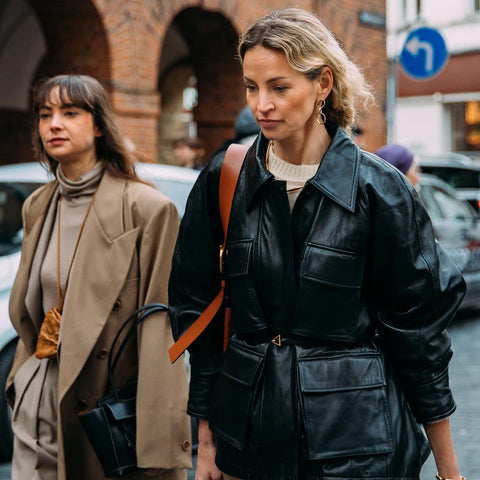
Earrings That Won't Irritate
If you've ever experienced sore, itchy, or inflamed ears from cheap earrings, try our 316L steel earrings. They use the same biocompatible material found in surgical implants — your ears deserve nothing less.
Shop Earrings → · Aura Collection →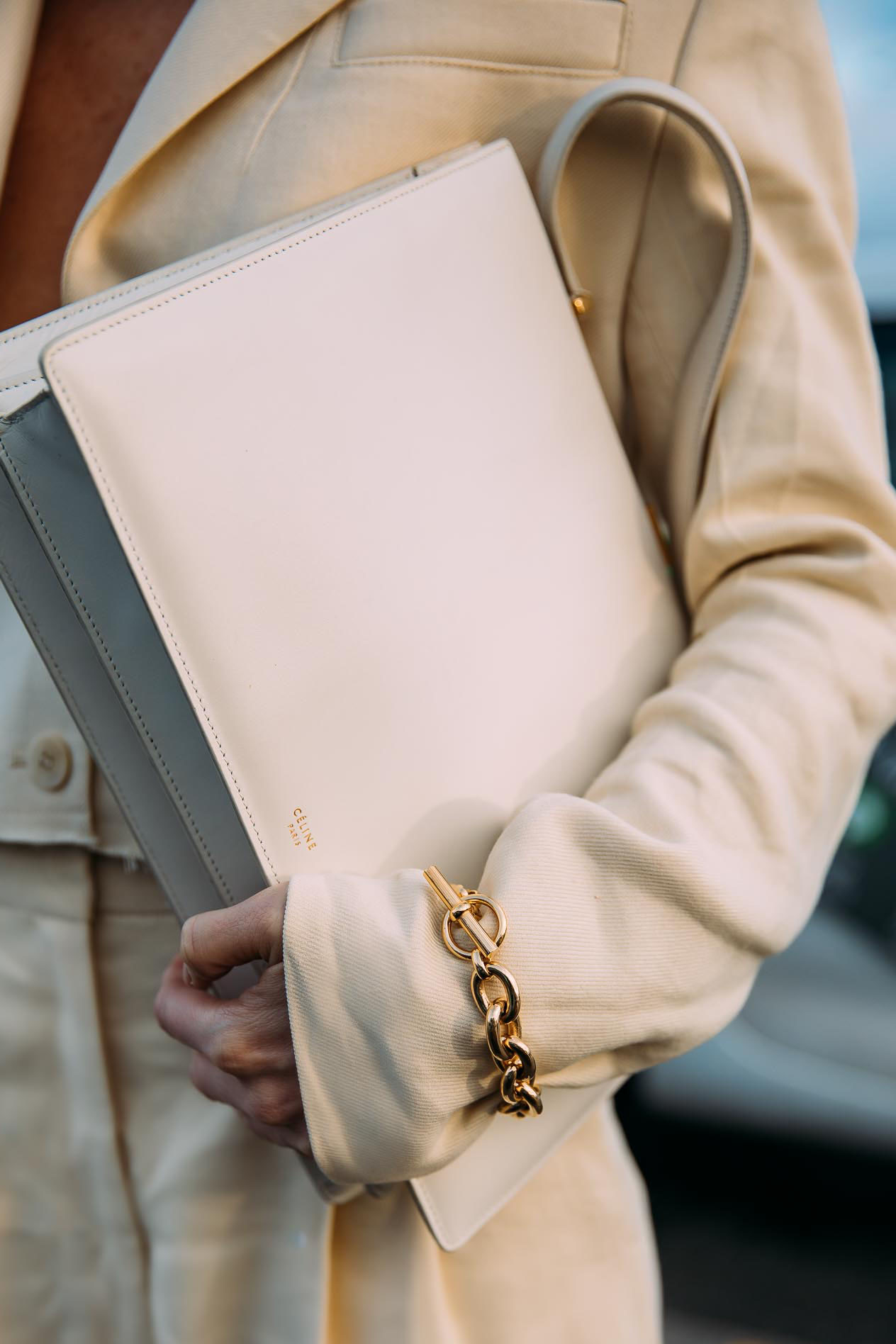
Rings You'll Forget You're Wearing
From everyday bands to Bob Collection statement rings, every LOTTEDS ring is built on 316L steel. No green fingers. No irritation. Just comfortable, confident wear.
Shop Rings → · Bob Collection →What the EU Has Done — And Why It Matters
European consumers benefit from some of the strongest consumer protection regulations in the world. If you're shopping from within the EU, you're protected by:
- EU Nickel Directive (EN 1811): Limits nickel release from jewellery to 0.5 μg/cm²/week. This is why quality jewellery sold in the EU shouldn't cause nickel allergies — but enforcement is inconsistent, especially for online imports.
- REACH Regulation (EC 1907/2006): Governs the use of chemicals in consumer products, including heavy metals in jewellery. Substances of Very High Concern (SVHCs) are restricted or banned.
- General Product Safety Regulation (GPSR): Requires that all consumer products sold in the EU are safe for their intended use — including prolonged skin contact.
At LOTTEDS, we test our materials to these standards. Not because we have to — because it's the right thing to do. Our 316L stainless steel is compliant with EN 1811. Our PVD gold process uses no restricted substances. And we're transparent about all of it. Read our full EU compliance guide →
Jewellery Should Honour Your Body
You shouldn't have to choose between beautiful jewellery and comfortable skin. You shouldn't have to remove your necklace halfway through the day because it's irritating your neck. You shouldn't have to scrub green residue off your fingers every evening. And you absolutely shouldn't have to believe that your body is "too sensitive" to wear the things that make you feel beautiful.
The women who called Livia for 12 years deserved better. So do you. Whether you're looking for a hypoallergenic ring, a bracelet that won't irritate, earrings for sensitive ears, or a necklace you can wear 24/7, every LOTTEDS piece starts with the same question: will this honour the skin it touches?
Ready for Jewellery That Respects Your Skin?
Shop Sale → Shop Essentials → Hot Sale → Our Materials →Sustainability commitments → · FAQ → · PVD vs. Traditional Plating →
Laissez un commentaire